Urology, explained the way
surgeons explain it to family.
Twenty surgeon-reviewed guides on prostate health, kidney stones, men’s health,
and travelling for treatment — written to answer the exact questions patients
type into Google at 2 a.m.
The Lead Story
July 2026 Edition
BPH & Prostate
Rezūm Just Got Bigger: The 150cc Clearance That Changes Who Qualifies
For years the answer to “can I have Rezūm?” came down to one number. In 2026 that number nearly doubled — and a large group of men who were told no are now candidates.
UroloMax Medical Board·July 24, 2026·6 min read
Read the full story
More From This Edition
BPH & Prostate6 min read
Rezūm Just Got Bigger: The 150cc Clearance That Changes Who Qualifies
For years the answer to “can I have Rezūm?” came down to one number. In 2026 that number nearly doubled — and a large group of men who were told no are now candidates.
Read Article
If you were assessed for Rezūm water vapour therapy before this year and told your prostate was simply too large, that verdict may no longer stand. In the first quarter of 2026, Rezūm’s clearance was expanded to treat prostates of up to 150cc — nearly double the previous ceiling. It is the most consequential change to the minimally invasive BPH landscape in a decade, and almost nobody has told the patients it affects.
What actually changed
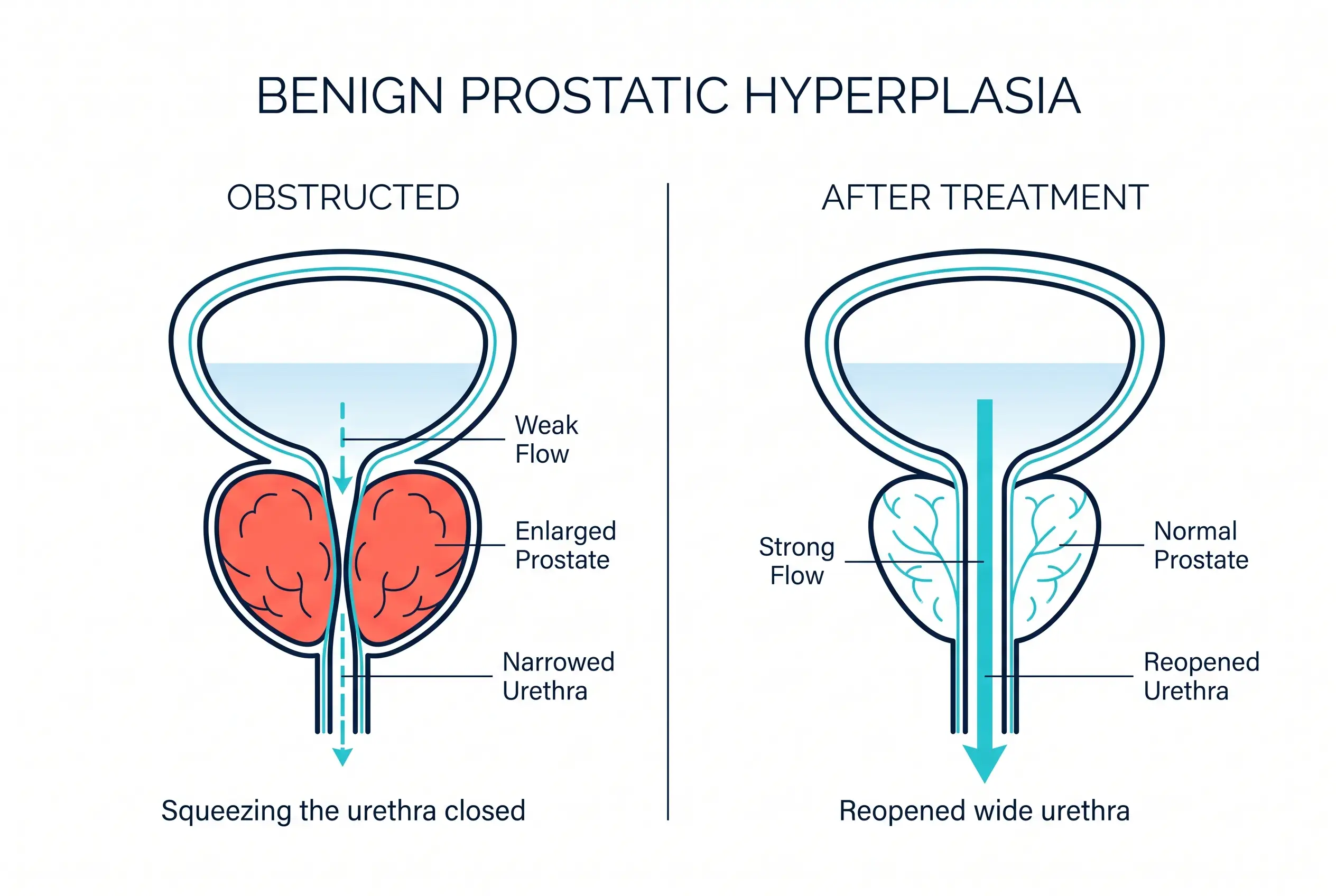
Rezūm was originally cleared for prostates in the 30–80cc range. That single number decided a great deal: men above it were routed either to HoLEP laser enucleation, to open simple prostatectomy, or — most often — to another decade of tablets. The expanded clearance to 150cc brings a large, previously excluded population into scope for an office-based, five-minute, function-preserving treatment.
Nothing about the mechanism changed. What changed is the evidence base and the regulatory ceiling that follows it.
Why the 80cc ceiling existed in the first place
Convective water vapour works by delivering thermal energy into a defined volume of tissue, which the body then resorbs over weeks. In a very large gland, the concern was straightforward arithmetic: could enough vapour injections reach enough tissue to relieve a heavier obstruction, and would the result hold? The original clearance reflected the sizes studied at the time, not a biological wall.
As experience and published series extended into larger prostates, the answer proved more favourable than the original limit implied — with more injections, careful mapping, and realistic counselling about a slower onset of relief.
Who this newly includes
Men measured between 80cc and 150cc who were previously told “too large for Rezūm”.
Men on anticoagulants for whom major surgery is a genuine risk calculation.
Men whose absolute priority is preserving erectile and ejaculatory function — the reason most Rezūm patients choose it in the first place.
Executives and travellers who cannot absorb a surgical recovery, but whose prostate size had previously ruled the option out.
Where HoLEP still wins — and we will still say so
An expanded clearance is not a promotion to universal first choice. For a very large gland with severe obstruction, established retention, bladder stones or a thickened, failing bladder wall, HoLEP remains the more definitive operation: it removes the obstructing tissue completely, in one procedure, with near-zero long-term re-treatment and a full histopathology report on every gram removed.
Rezūm relieves; HoLEP resolves. Both are legitimate answers to different questions.
The right question was never “which treatment is best?” It has always been “which problem am I actually solving, and what am I unwilling to trade for it?”
What to ask before you accept either answer
What is my prostate volume, in cc? Not “large” — the number, from imaging.
What is my post-void residual, and is my bladder wall thickened? Bladder damage, not gland size, is what makes surgery urgent.
How many Rezūm cases above 80cc has this surgeon personally performed? A new ceiling does not create experience.
What is the realistic timeline to relief in a gland my size? Larger glands resorb more slowly — expect months, not days.
If you were turned away from Rezūm on the basis of size, it is worth having that measurement re-read against the 2026 criteria. Our surgeons hold both instruments and no commercial reason to prefer either — read the full protocols on the Rezūm and HoLEP pages, or send your volume and symptoms for a private review.
BPH & Prostate — UroloMax Medical Board
BPH & Prostate6 min read
HoLEP vs TURP: Which Prostate Surgery Is Right for You?
Two operations, one goal — but very different outcomes. A surgeon-reviewed comparison of the classic TURP and the modern HoLEP laser standard.
Read Article
For decades, TURP (transurethral resection of the prostate) was the default operation for an enlarged prostate. Today, international guidelines recognise HoLEP laser enucleation as the size-independent gold standard. If you are weighing the two, here is what actually differs.
How each procedure works
TURP shaves the inner prostate away in chips, like coring an apple from the inside — it removes part of the obstruction. HoLEP instead traces the natural plane between the overgrown adenoma and the prostate capsule, detaching the entire obstructing lobe in one piece before morcellating it for removal.
The differences that matter
Completeness: TURP leaves tissue behind; regrowth sends up to 1 in 5 men back to surgery within 10 years. HoLEP re-treatment rates are near zero.
Bleeding: the holmium laser seals vessels as it works — HoLEP is routinely performed on men who cannot stop blood thinners.
Cancer screening: every gram removed by HoLEP is sent to pathology, silently screening for incidental prostate cancer.
So why does anyone still get TURP?
Availability. HoLEP has a long surgeon learning curve, so relatively few centres worldwide offer it at high volume. That scarcity — not clinical superiority — keeps TURP common.
The right question is not “which operation” but “which surgeon, at what case volume.”
How Much Does HoLEP Surgery Cost in Turkey? (2026 Guide)
A transparent breakdown of what HoLEP really costs in Istanbul versus London, Berlin, and New York — and what a serious quotation must include.
Read Article
Patients researching HoLEP abroad usually find prices ranging from vague to suspicious. Here is a transparent framework for 2026.
The honest numbers
In the United States, HoLEP typically bills at $18,000–$30,000+. In the UK and Germany, private rates run £12,000–£18,000 and €10,000–€16,000. In Istanbul’s JCI-accredited hospitals, the complete procedure — same laser platform, high-volume surgeon — is typically 60–70% less, without waiting lists.
Why Turkey is genuinely cheaper (not lower quality)
Operating costs and salaries are structurally lower — the surgeon’s training is not.
Government-supported health tourism infrastructure reduces overheads.
High procedure volumes: Istanbul urology centres operate daily, driving efficiency.
What a serious quotation must include
Named surgeon — confirmed in writing before travel
All hospital fees, anesthesia, and one night’s stay
Pre-operative tests and post-operative reviews
Histopathology of all removed tissue
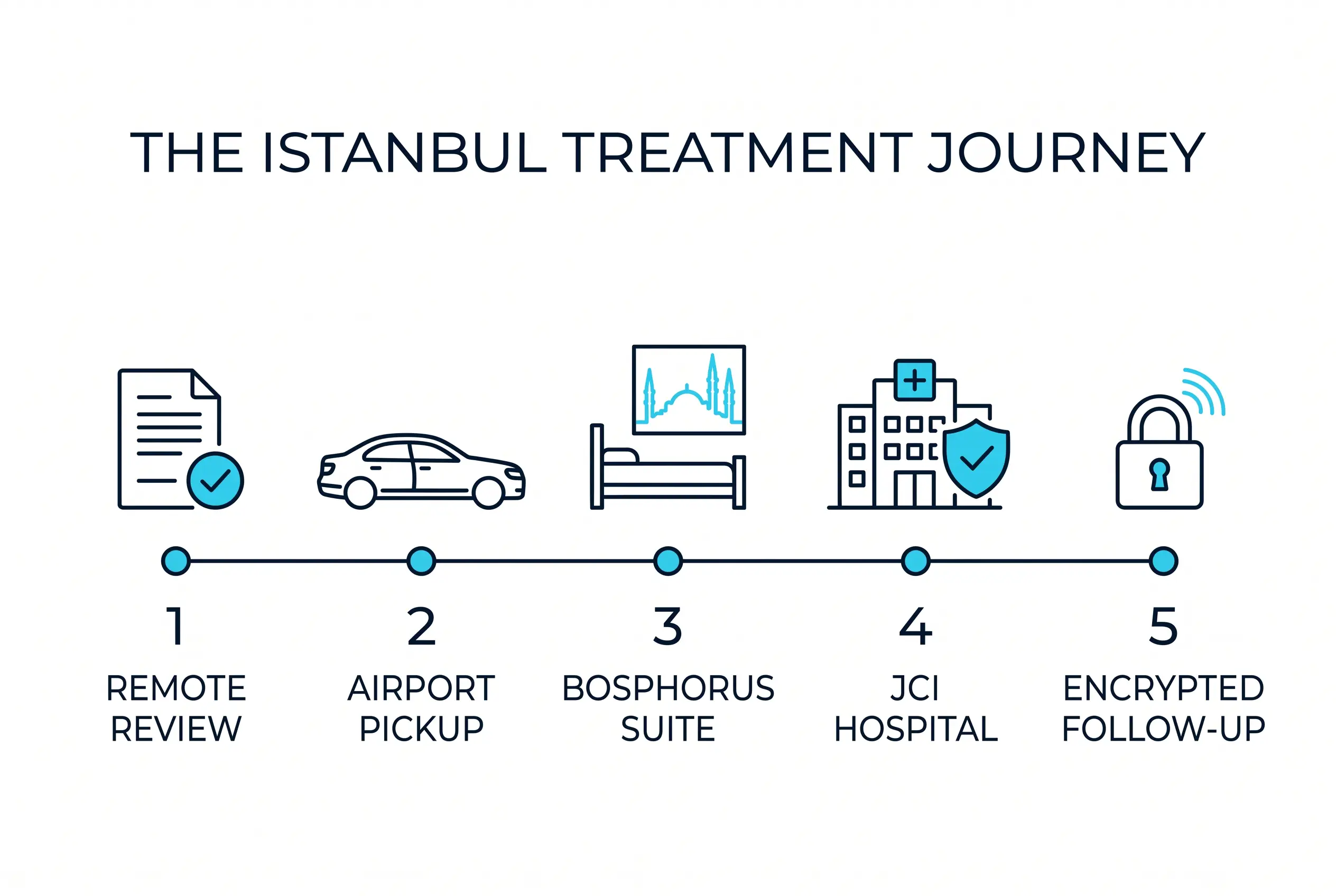
Airport pickup and all hotel–clinic transfers
A translator at every clinical conversation
If a price excludes any of these, it is not a price — it is bait. UroloMax issues one written, all-inclusive quotation. See what every journey includes on The Concierge Journey, then request yours privately.
Medical Travel — UroloMax Medical Board
BPH & Prostate5 min read
Rezūm Water Vapor Therapy: 7 Things to Know Before You Book
Five minutes of steam that shrinks the prostate — but is it right for you? Seven surgeon-verified facts about the function-preserving BPH therapy.
Read Article
Rezūm has become the most requested BPH treatment among men in their 40s and 50s — largely because of one promise: relief without sexual side effects. Seven facts before you book anywhere.
1. The active treatment takes about five minutes
Two to six nine-second injections of sterile water vapor. The visit itself, with preparation, is an afternoon.
2. It preserves erectile and ejaculatory function
Pivotal trials reported zero device-related erectile dysfunction. The convective vapor respects tissue boundaries, sparing the nerves.
3. Results build over weeks, not overnight
Your body resorbs the treated tissue gradually — most men feel meaningful relief by week 2–4, maturing over three months.
4. A temporary catheter is normal
A few days, while initial swelling settles. Plan for it; do not be surprised by it.
5. It is durable
Published five-year follow-up shows sustained relief with low re-treatment rates.
6. It is not for every prostate
Very large glands and severe retention are usually better served by HoLEP. A surgeon who offers both will tell you the truth; a clinic that only sells one tool will sell you that tool.
BPH Symptoms: When Does an Enlarged Prostate Actually Need Surgery?
Half of men over 50 have an enlarged prostate. Most don’t need surgery — here’s how to recognise the ones who do, before the bladder pays the price.
Read Article
Benign prostatic hyperplasia (BPH) affects roughly half of men over 50 and 80% of men over 70. Enlargement alone is not a reason to operate — but certain signals are.
The symptoms men normalise (and shouldn’t)
Waking two or more times a night to urinate (nocturia)
A weak or interrupted stream; straining to start
The feeling of never fully emptying
Sudden urgency that dictates where you sit in restaurants
When watchful waiting is reasonable
Mild symptoms with no bladder impact can be monitored or managed with medication. Alpha-blockers relax the channel; 5-ARIs slowly shrink the gland. Both trade symptom relief for side effects — dizziness, reduced libido, retrograde ejaculation — and neither stops long-term growth.
The red lines where surgery becomes protective
Urinary retention — any episode requiring a catheter
Recurrent infections or bladder stones caused by residual urine
Bladder muscle damage visible on ultrasound (thickening, diverticula)
Catheter out in 24 hours, flying home in five days, gym in a month. A realistic, week-by-week map of HoLEP recovery from surgeons who do it daily.
Read Article
The question every HoLEP patient asks is not about the operation — it is about the weeks after. Here is the realistic timeline our surgeons give their own patients.
Days 0–2: hospital and catheter removal
One night of observation with gentle bladder irrigation. The catheter comes out the next morning; the vast majority of men urinate freely at the first attempt and are discharged the same day. Pain is typically managed with paracetamol alone.
Days 3–7: the quiet week
Expect a strong stream immediately — often the best in years — alongside temporary urgency and burning as the internal surface heals. Blood-tinged urine on and off is normal. Walk daily, drink well, avoid heavy lifting. International patients are typically cleared to fly around day 4–5.
Weeks 2–4: back to normal life
Desk work from week one or two; driving once off any sedating medication; light exercise from week three. Urgency settles progressively as the bladder relearns life without obstruction.
Weeks 4–8: full clearance
Gym, cycling, intimacy — usually all cleared by week four to six at your remote follow-up. Ejaculation changes (retrograde flow) are common after any complete prostate surgery; erections and orgasm are not affected.
Forever: the part nobody talks about
Sleeping through the night. No more mapping bathrooms. HoLEP’s durability means this is a one-time journey for almost every patient. Start yours on the HoLEP page or request a private review.
BPH & Prostate — UroloMax Medical Board
Oncology6 min read
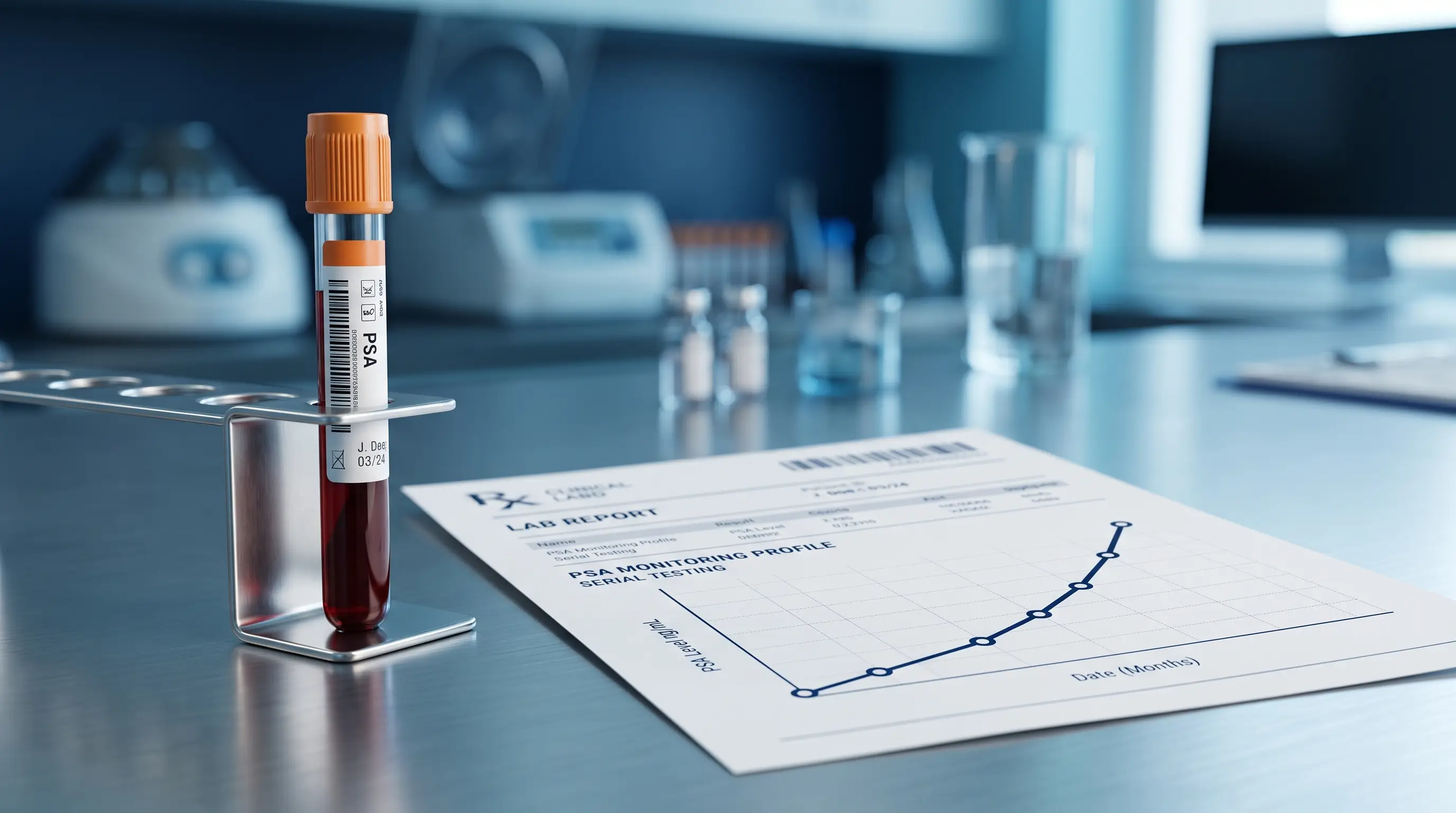
PSA Levels Explained: What Your Numbers Really Mean
A PSA of 5 is not a cancer diagnosis — and a PSA of 2 is not always safe. How urologists actually read the most misunderstood number in men’s health.
Read Article
Few lab values cause more unnecessary panic — or more dangerous complacency — than PSA. Here is how specialists actually interpret it.
What PSA is (and is not)
Prostate-specific antigen is a protein made by all prostate tissue — healthy, enlarged, inflamed, or cancerous. An elevated PSA says something is happening in the prostate; it does not say what.
What raises PSA besides cancer
Benign enlargement (BPH) — more tissue, more PSA
Prostatitis and urinary infections
Recent ejaculation, cycling, or a rectal exam
Simple lab variation — always repeat before reacting
The numbers that matter more than the number
PSA velocity: a rise of >0.75 ng/mL per year deserves attention even at low absolute values.
PSA density: the value divided by prostate volume — a PSA of 6 in a 90g prostate is very different from 6 in a 30g one.
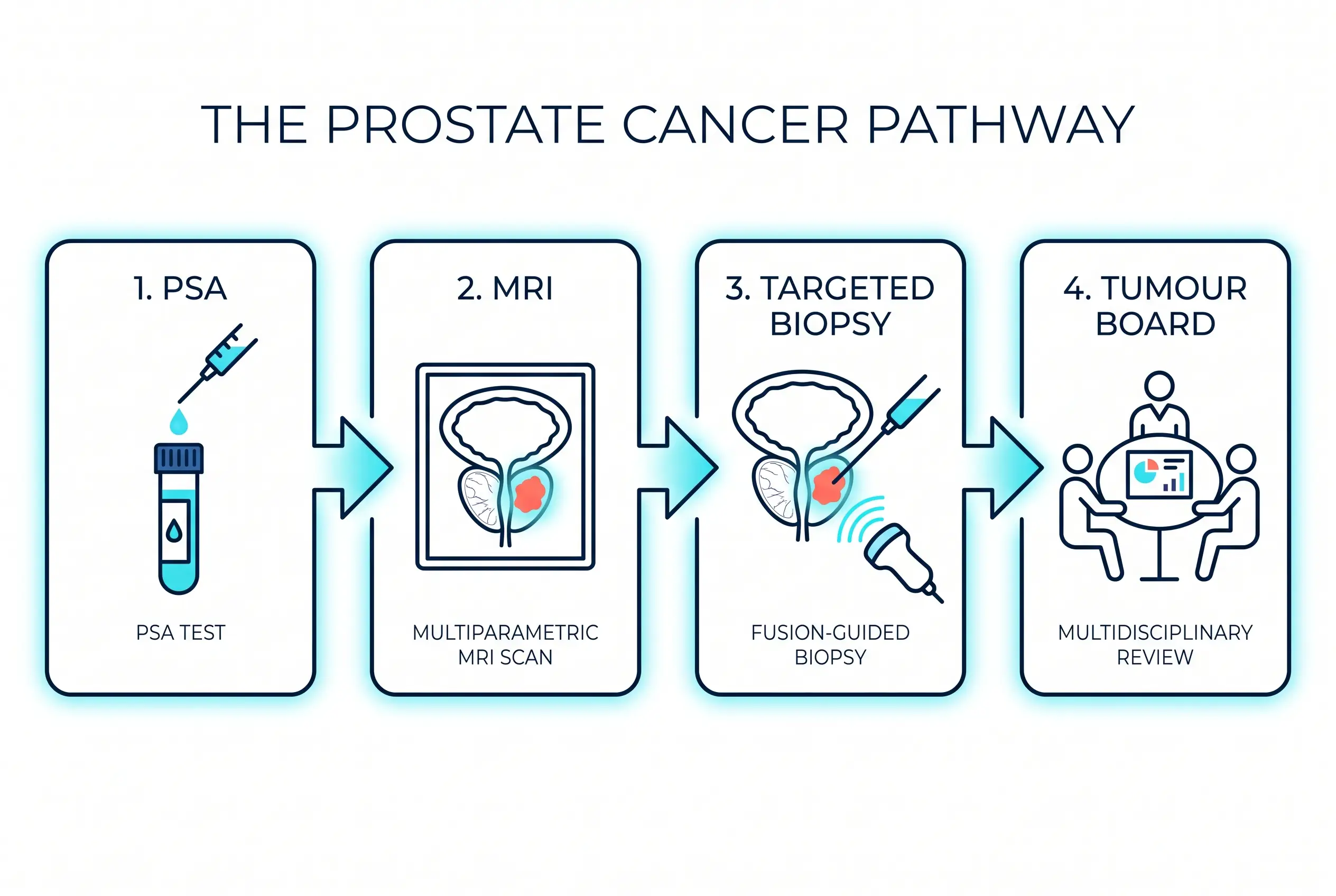
Modern practice does not jump to biopsy. A multiparametric MRI comes first; only suspicious lesions are biopsied, precisely and often fusion-guided. If cancer is confirmed, grading (see our Gleason guide) decides between surveillance and treatment.
If your PSA is rising and you want a second, unhurried opinion, our uro-oncology team reviews international cases remotely — confidentially, within one business day.
Oncology — UroloMax Medical Board
Oncology6 min read
Nerve-Sparing Robotic Prostatectomy: Protecting Continence and Potency
The cancer must go — but the nerves a millimetre away decide the rest of your life. Inside the technique that separates outcomes from statistics.
Read Article
Removing a cancerous prostate is only half the operation. The other half is preserving two structures that pass within a millimetre of it: the urinary sphincter complex and the neurovascular bundles governing erections.
Why the robot matters here
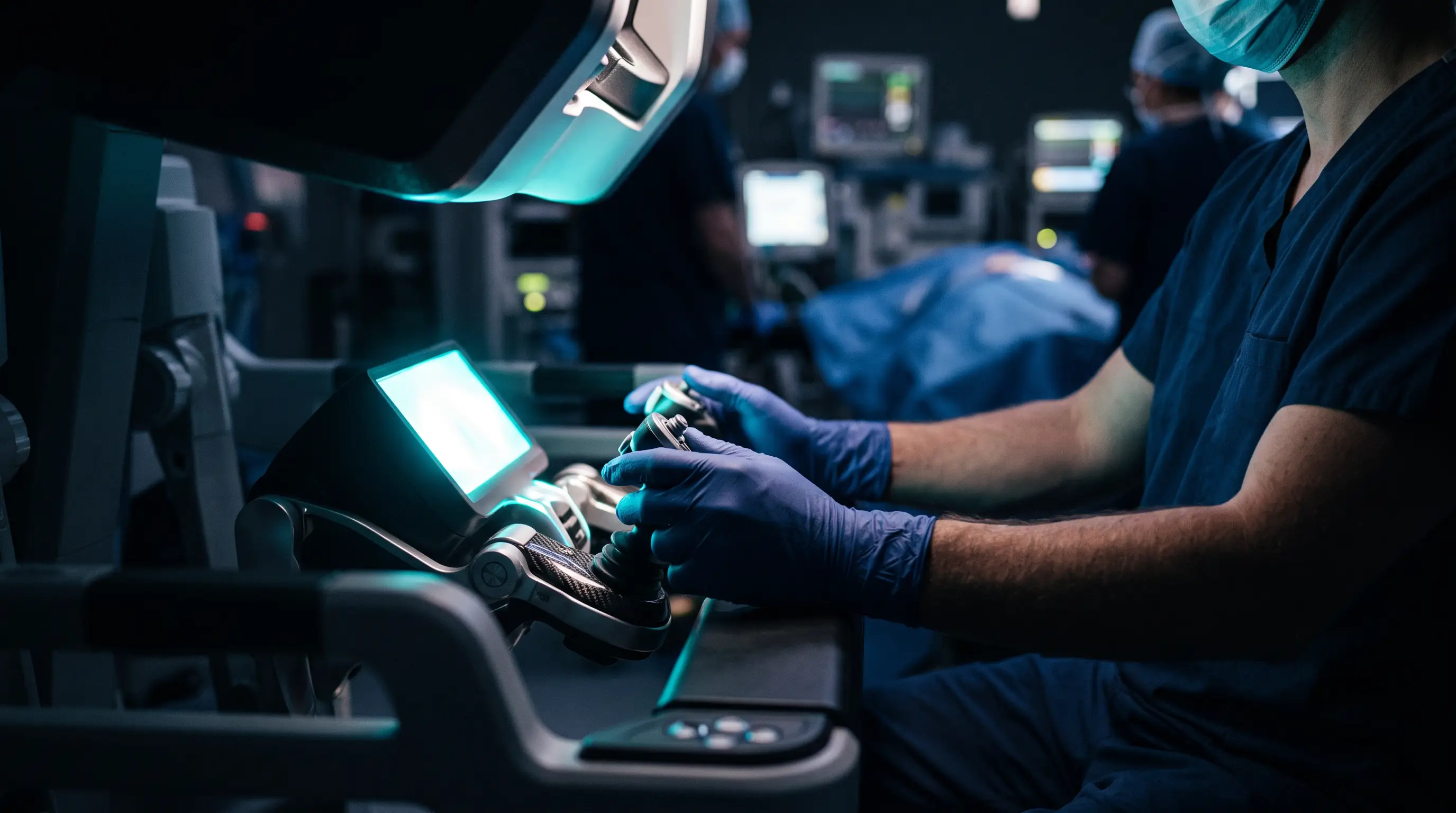
The Da Vinci Xi gives the surgeon 10× magnified 3D vision and wristed instruments with tremor filtration — sub-millimetre control exactly where the margin between cancer control and quality of life is decided. Read more on our Da Vinci Xi Robotic Oncology page.
Grades of nerve-sparing
Nerve-sparing is not all-or-nothing. Based on your MRI, biopsy map, and intraoperative findings, the surgeon performs full, partial, or unilateral sparing — taking wider margins only where the tumour demands it. This is why the pre-operative tumour board review matters as much as the surgery.
What the evidence says about volume
Published series are blunt: continence and potency outcomes track the individual surgeon’s case volume more than the technology. A robot in low-volume hands is still a low-volume operation. UroloMax partners exclusively with surgeons beyond 1,000 personal robotic cases.
Realistic expectations
Continence: most men are pad-free within weeks with early pelvic-floor work.
Potency: recovery over 6–24 months depending on age, baseline function, and sparing grade — with effective bridging therapies meanwhile.
Da Vinci Surgery in Turkey: Why International Patients Choose Istanbul
Same robot, same protocols, a fraction of the wait and cost. The clinical and practical case for robotic urologic surgery in Istanbul.
Read Article
Istanbul has quietly become one of the world’s highest-volume robotic surgery hubs. For international urology patients, the case rests on four pillars.
1. The same platform, at higher volumes
The Da Vinci Xi in an Istanbul JCI hospital is the identical machine found in Boston or Munich. The difference is throughput: high-volume Turkish centres run robotic urology lists daily, and in surgery, volume is the strongest predictor of outcomes.
2. No waiting list when time matters
A localized prostate cancer does not become inoperable in three months — but living three months on a public waiting list with a known cancer is its own morbidity. International patients are typically scheduled within 1–2 weeks of case acceptance.
3. JCI accreditation, verifiable
Joint Commission International audits hospitals against the same standard as leading US academic centres — and its directory is public. We explain what to check in our JCI guide.
4. The economics
Robotic prostatectomy in Istanbul typically costs 60–70% less than Western private rates — including hospital, surgeon, anesthesia, and stay. The savings fund the part Western hospitals never include: a full concierge journey with airport pickup, five-star recovery, and a translator at every conversation.
Prostate Cancer Second Opinions: Why They Change the Plan in 1 of 3 Cases
Pathology re-reads change the Gleason score surprisingly often — and with it, everything. When and how to seek a second opinion without offending anyone.
Read Article
Published reviews consistently find that expert re-evaluation of prostate cancer cases changes the recommended management in roughly one in three patients — sometimes toward treatment, often away from it.
What actually gets re-examined
The pathology slides: Gleason grading has real inter-observer variation; an upgrade or downgrade can move you between surveillance and surgery.
The MRI: re-read by a dedicated uro-radiologist against PI-RADS criteria.
The plan itself: is active surveillance safe? Is radiation genuinely equivalent for your profile? Was nerve-sparing dismissed too quickly?
When a second opinion is most valuable
Gleason 3+4 “borderline” cases — the surveillance/treatment fence
Any recommendation that came without a multidisciplinary board
High-volume decisions from low-volume centres
When you simply were not given time to ask questions
Will it offend my urologist?
No competent oncologist resents verification — medicine expects it. And a remote second opinion costs you nothing but a file transfer: no travel, no commitment.
You will make this decision once. It deserves two sets of eyes.
UroloMax provides confidential remote second opinions: your imaging, pathology, and history reviewed by our tumour board, answered in writing within days.
Oncology — UroloMax Medical Board
Oncology6 min read
Gleason Score Guide: Reading Your Prostate Biopsy Like a Specialist
What 3+4 versus 4+3 really means, why Grade Groups replaced raw scores, and which numbers justify surveillance rather than surgery.
Read Article
Your biopsy report holds one number that shapes everything that follows. Here is how to read it the way a uro-oncologist does.
How the score is built
The pathologist grades the two most common patterns in your biopsy from 3 (organised) to 5 (aggressive), then adds them. Crucially, order matters: 3+4 means mostly pattern 3 with some 4; 4+3 means the aggressive pattern dominates — a meaningfully different disease.
The modern Grade Groups
Grade Group 1 (3+3=6): the “cancer” that almost never metastasises — surveillance territory.
Grade Group 2 (3+4=7): favourable intermediate; surveillance or treatment, case by case.
Grade Group 3 (4+3=7): unfavourable intermediate; treatment usually advised.
Grade Groups 4–5 (8–10): high risk; prompt, definitive treatment.
The context that changes the meaning
The same Gleason reads differently depending on PSA density, number of positive cores, percentage involvement, MRI PI-RADS score, and your age and health horizon. This is exactly why a number alone should never dictate surgery — and why grading benefits from expert re-review (see our second opinion article).
Kidney Stone Types & the Prevention Diet That Actually Works
Half of stone formers relapse within ten years — almost all preventably. The evidence-based diet rules, by stone type, that urologists actually follow.
Read Article
Passing one kidney stone gives you a 50% chance of another within ten years — unless you change the chemistry that built it. Prevention starts with knowing your stone type.
Rule zero: dilution
Whatever your stone type, the single most powerful intervention is producing 2.5 litres of urine daily — roughly 3 litres of fluid in. Urine should run pale all day. This alone halves recurrence.
Calcium oxalate (about 75% of stones)
Do not cut calcium — the classic mistake. Normal dietary calcium binds oxalate in the gut. Cutting it raises stone risk.
Limit high-oxalate loads: spinach, rhubarb, almonds, beetroot — and never on an empty stomach.
Cut sodium hard: salt drags calcium into urine.
Fresh lemon daily — citrate is a natural crystallisation inhibitor.
Uric acid stones (about 10%)
These dissolve with urine alkalinisation — sometimes without surgery at all. Reduce red meat and organ meats, address metabolic syndrome, and follow your urologist’s citrate protocol.
Struvite and cystine
Infection stones and genetic cystinuria need specialist management, not diet blogs.
The step most clinics skip
Guessing your stone type is not prevention. A 24-hour urine metabolic study plus stone analysis identifies your exact chemistry — it is included in every UroloMax renal journey, alongside the RIRS thulium laser that removes the stone you already have. Send your CT report privately.
Kidney Stones — UroloMax Medical Board
Kidney Stones5 min read
RIRS vs Shockwave (ESWL): Which Kidney Stone Treatment Wins in 2026?
Shockwave is gentler on paper; RIRS clears the stone in one session. An honest comparison urologists give their own family members.
Read Article
For kidney stones under 2cm, two treatments dominate the conversation: extracorporeal shockwave lithotripsy (ESWL) and retrograde intrarenal surgery (RIRS). Here is the comparison without marketing.
How each works
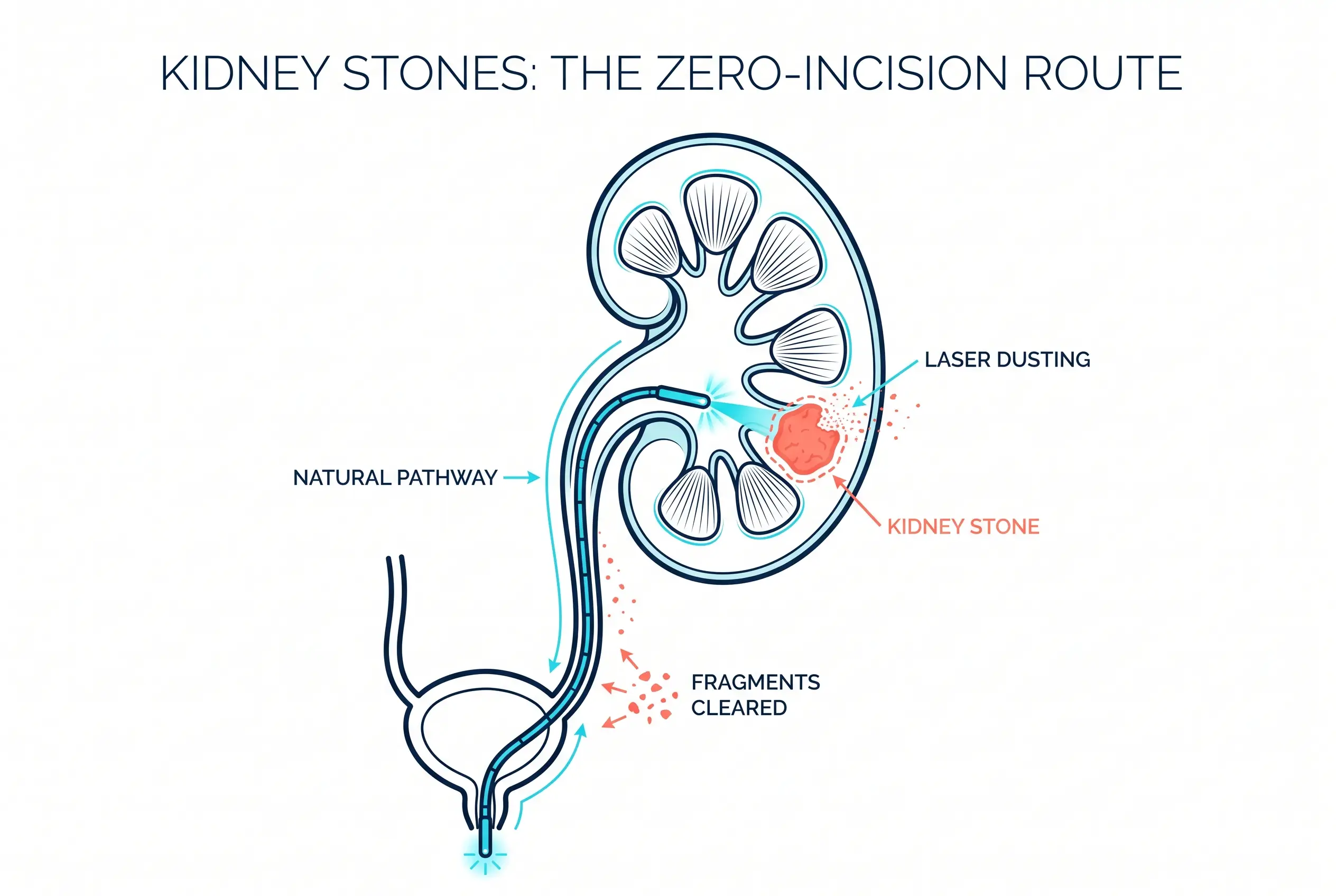
ESWL focuses shockwaves through the skin to crack the stone into fragments you then pass — over days to weeks, sometimes painfully. RIRS sends a flexible scope through natural pathways directly to the stone and dusts it with a laser in a single session. No incision either way.
Where ESWL still makes sense
Small (<1cm), soft stones in favourable upper positions
Thulium Fiber Laser: Why It’s Replacing Holmium for Kidney Stones
Twice the dusting efficiency, finer fragments, less heat. What the new laser generation changes for patients — in plain language.
Read Article
For two decades, the holmium:YAG laser was the undisputed standard for stone surgery. The thulium fiber laser (TFL) is now superseding it in leading centres — here is what that means for you as a patient.
What changes inside the kidney
Finer dusting: TFL ablates stone into powder-like particles that wash out naturally — fewer retrievable fragments, fewer leftovers to regrow.
Roughly twice the ablation efficiency: shorter laser time for the same stone burden.
Less retropulsion: the stone barely moves while being treated, so the surgeon chases it less.
Lower heat transfer: gentler on the delicate renal lining.
What changes for you
Shorter anesthesia, higher single-session stone-free rates, fewer stents placed “just in case,” and a lower chance of a second procedure. Combined with single-use digital scopes — a sterile instrument for every patient — RIRS with TFL is the most refined stone treatment currently available.
The honest caveat
The laser is only as good as the centre that owns one and the surgeon behind it. TFL adoption is still uneven worldwide; many clinics advertising “laser stone surgery” still run older platforms. Ask which laser, by name.
10 Warning Signs You Should See a Urologist This Month
Men wait an average of two years too long. Ten signals — some obvious, some surprising — that deserve a specialist’s attention now, not eventually.
Read Article
Urological problems are among the most treatable in medicine — and among the most delayed, because men normalise symptoms for years. Ten signals that warrant a specialist this month:
The urinary signals
1. Blood in urine — even once, even painless. This is the rule with no exceptions.
2. Waking twice or more nightly to urinate (see our nocturia guide)
3. A weakening stream or straining to start
4. Recurrent urinary infections — in men, never “just one of those things”
5. Any episode of retention — suddenly unable to urinate
The signals men least expect
6. Erectile changes — often the first visible sign of vascular disease, years before the heart complains
7. Flank pain that comes in waves — classic stone colic, even if it passes
8. A testicular lump or heaviness — curable at 95%+ when caught early
9. Blood in semen — usually benign, always worth confirming
10. A rising PSA — not a diagnosis, but never an ignore (see PSA explained)
None of these signals means the worst. All of them mean: this month, not this year.
Erectile Dysfunction After 50: Causes and Solutions That Actually Work
ED is a symptom before it is a condition — and every stage has a working answer, up to a definitive one. The complete treatment ladder, honestly explained.
Read Article
Erectile dysfunction affects more than half of men over 50 in some degree. Two facts get lost in the embarrassment: it is usually a symptom of something measurable, and every severity level has an effective answer.
First: why it happens
An erection is a vascular event. The same processes that narrow heart arteries — hypertension, diabetes, cholesterol, smoking — narrow penile arteries first, because they are smaller. Hormones, medications, prostate treatments, and psychology layer on top. This is why new ED deserves a medical workup, not just a prescription.
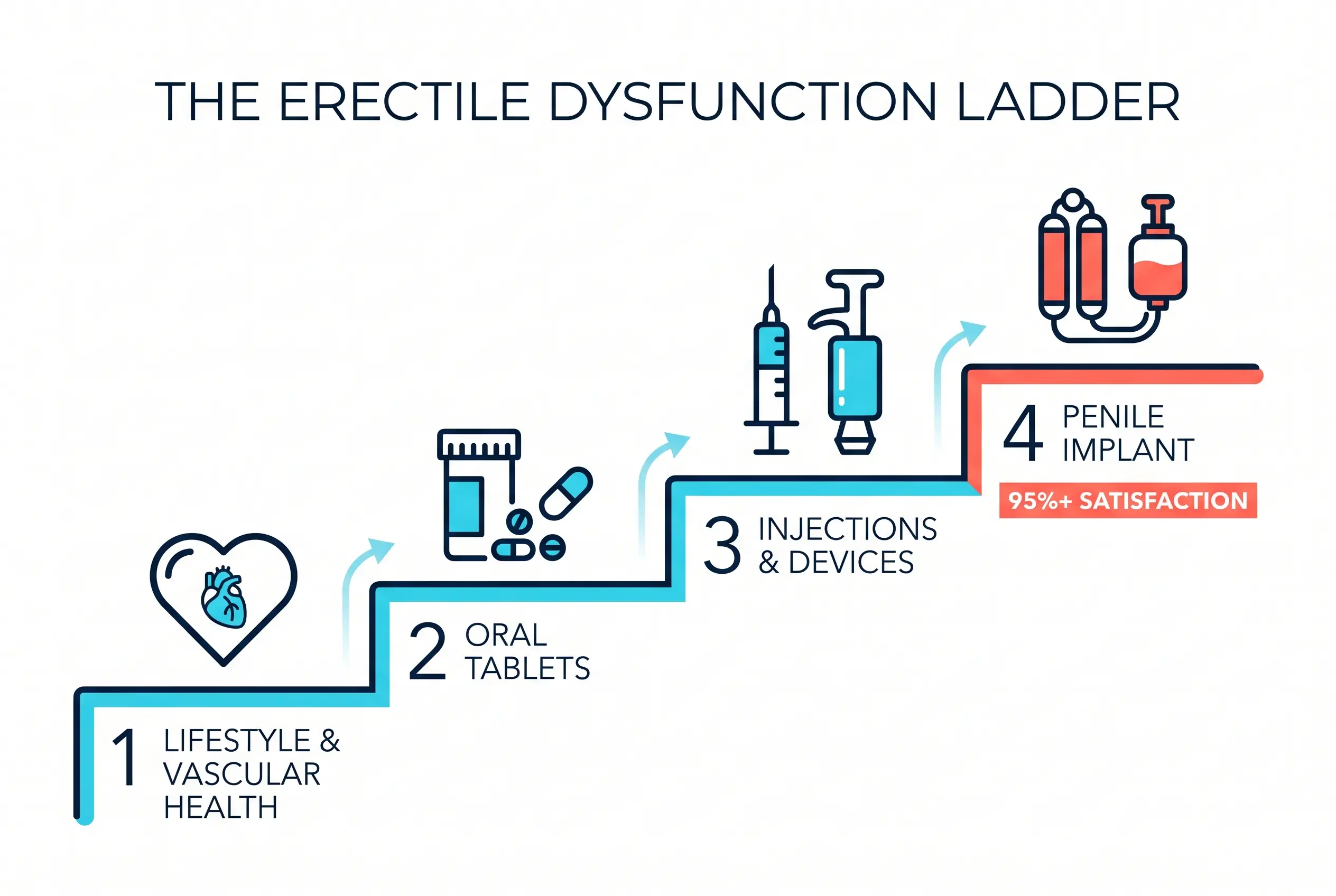
The treatment ladder
Step 1 — Fix the plumbing inputs: blood pressure, sugar, weight, smoking. Underrated and occasionally curative.
Step 2 — PDE5 inhibitors (sildenafil, tadalafil): effective for ~70% initially, less so as vascular disease progresses.
Step 3 — Injections and devices: effective but spontaneity-hostile; many men quietly abandon them.
Step 4 — The definitive answer: the inflatable penile prosthesis — entirely internal, on-demand, with 95%+ satisfaction, the highest of any ED treatment.
The threshold men miss
When pills have failed twice at full dose with correct use, escalating through years of half-solutions has a cost measured in relationships. The definitive option is not a last resort — it is a choice. Read the facts (and the myths) on our Penile Implant Restoration page, or ask privately — discretion is our default.
Men’s Health — UroloMax Medical Board
Men’s Health5 min read
Penile Implants: Separating Myths from Facts
“People will notice.” “It won’t feel natural.” “It’s for old men.” Every myth, tested against the published evidence and 50 years of device history.
Read Article
No effective treatment in urology is surrounded by more misinformation than the penile prosthesis. Let us test the myths against evidence.
Myth 1: “People will be able to tell”
Fact: a three-piece inflatable implant is entirely internal — cylinders in the penis, a concealed pump in the scrotum, a reservoir behind the abdominal wall. Flaccid appearance is natural; nothing is visible in a locker room, and nothing is detectable to a partner unless you choose to tell.
Myth 2: “It won’t feel like me”
Fact: sensation, orgasm, and ejaculation are governed by nerves the implant never touches. Everything you feel today, you feel after — with reliable mechanics underneath it.
Myth 3: “Satisfaction must be low”
Fact: patient satisfaction consistently exceeds 95% — the highest of any ED treatment, pills included. Partner satisfaction tracks nearly as high.
Myth 4: “They break and need constant surgery”
Fact: modern devices routinely function 15–20 years. Mechanical survival at 10 years exceeds 90%.
Myth 5: “It’s a last resort for old men”
Fact: the average recipient is in his 50s–60s; the fastest-growing group is younger men after prostate surgery or with diabetes who refuse a decade of injections.
Waking Up to Urinate at Night? Nocturia Causes and Real Fixes
Twice a night is not “just age.” The four distinct mechanisms behind nocturia — and why the fix depends entirely on which one is yours.
Read Article
Waking once at night to urinate is within normal. Twice or more, night after night, is nocturia — and it has four distinct mechanisms. The fix depends entirely on which is yours.
Mechanism 1: the obstructed bladder (the prostate story)
An enlarged prostate never lets the bladder empty fully, so it refills fast — and an irritated, thickened bladder wall signals urgency at low volumes. Daytime symptoms usually coexist: weak stream, hesitancy. This is the mechanism modern surgery fixes outright — see HoLEP and Rezūm.
Mechanism 2: nocturnal polyuria (the fluid-shift story)
Your body simply makes too much urine at night — common with ageing hormone rhythms, heart insufficiency, sleep apnea, and evening fluid or alcohol. Clue: large volumes each waking. Managed medically, not surgically.
Mechanism 3: the small or overactive bladder
Frequent small voids day and night point to an overactive bladder — treated with training, medication, or neuromodulation.
Mechanism 4: sleep itself
Sometimes apnea or insomnia wakes you first, and the bathroom trip is a habit stitched onto the waking.
How specialists tell them apart
A simple 3-day frequency-volume diary plus ultrasound residual measurement separates the four in one consultation. It is the first thing our urologists ask for — start with a private symptom review and sleep through the night again.
Men’s Health — UroloMax Medical Board
Medical Travel7 min read
Medical Tourism in Turkey: The Complete Safety Guide for 2026
Two million patients fly to Turkey yearly. Most have excellent outcomes; a minority choose badly. The verification checklist that separates the two.
Read Article
Turkey hosts around two million international patients a year — one of the largest medical tourism destinations on earth. Outcomes are overwhelmingly excellent when patients verify rather than trust. Here is the checklist.
1. Verify the hospital, not the website
Beautiful websites are cheap; accreditation is not. Confirm the hospital appears in the public JCI directory (see our JCI guide). For urology, also ask about procedure-specific volumes: how many HoLEP or robotic cases does this team perform monthly?
2. Demand a named surgeon — in writing
The single biggest red flag in medical tourism is the unnamed “our surgical team.” You are entitled to know who operates, their case volume, and their publications, before you pay anything.
3. Insist on a remote review before travel
A serious centre reviews your imaging and history and issues a written plan before you book flights. A clinic that says “just come, we will see” is selling travel, not medicine.
4. One written, all-inclusive quotation
Hospital, surgeon, anesthesia, stay, tests, pathology, transfers, translation, follow-up — itemised. Anything “to be discussed on arrival” will be discussed at maximum leverage: yours, gone.
5. Confirm the aftercare channel
Who reads your labs in month three — the surgeon, or nobody? Lifetime encrypted follow-up is standard at UroloMax; ask any provider the same question.
JCI Accreditation: What It Actually Means When Choosing a Hospital Abroad
Every clinic claims “international standards.” Only some can prove it. What JCI audits, what it can’t guarantee, and how to verify a claim in 60 seconds.
Read Article
“International standards” appears on every medical tourism website. Joint Commission International accreditation is the version you can verify.
What JCI actually is
JCI is the international arm of the body that accredits leading US hospitals. Its surveyors audit a hospital on-site, tracer-style — following real patients through real processes — against hundreds of measurable standards: surgical safety checklists, infection control, medication management, sterilisation, staff credentialing, emergency readiness. Accreditation must be re-earned every three years.
What it guarantees
Systems: the checklist happens before every incision, whoever is operating.
Traceability: your records, consents, and pathology follow an auditable chain.
Credentialing: the person called “surgeon” verifiably is one.
What it cannot guarantee
JCI accredits hospitals, not individual surgeons’ case volumes or your specific outcome. It is the floor, not the ceiling — which is why UroloMax layers a second filter on top: named surgeons with published, four-figure procedure volumes.
Verify any claim in 60 seconds
Search the hospital’s name in the public JCI directory at jointcommissioninternational.org. If it is not there, the “internationally accredited” badge on their website is decoration.
Every UroloMax procedure takes place in a JCI-listed Istanbul hospital — verifiable before you ever send us a message.
Medical Travel — UroloMax Medical Board
Medical Travel6 min read
Planning Your Medical Trip to Istanbul: Visas, Timing, and Recovery
From e-visa to fitness-to-fly: the practical logistics of a treatment week in Istanbul, answered in the order you’ll actually need them.
Read Article
Once the medical decision is made, the practical questions begin. Here are the answers in the order you will need them.
Visas and entry
Citizens of most European, Gulf, and many other countries enter Turkey visa-free or with a simple e-visa issued online in minutes. No special medical visa is required for treatment stays under 90 days. Your coordinator confirms your exact requirement when scheduling.
How long to stay
Rezūm or RIRS: 3–4 nights
HoLEP: 5–6 nights
Robotic prostatectomy or implant: 6–8 nights
Each includes consultation, procedure, recovery, and the final surgeon review with fitness-to-fly clearance — flying earlier than cleared is the one economy we refuse.
What to pack (and skip)
Comfortable loose clothing, your medication list, prior imaging on disc or link — and little else. Istanbul has everything; your concierge can source anything forgotten within hours.
Money and payments
One written quotation, payable by transfer or card; no cash envelopes, ever. Keep your invoice — many private insurers reimburse treatment abroad partially or fully.
The part you do not plan
Airport pickup, every transfer, admission paperwork, translation, and daily check-ins are already choreographed — that is the Concierge Journey. Your only task is the first message.
Medical Travel — UroloMax Medical Board
Men’s Health5 min read
The Prostate Health Checklist Every Man Over 40 Should Follow
Screening ages, the habits with real evidence behind them, and the symptoms that override every schedule. A decade-by-decade prostate plan.
Read Article
Prostate problems are near-universal with age — but late-stage surprises are largely optional. Here is the surveillance and lifestyle plan our urologists give their own brothers.
Your 40s: establish the baseline
A baseline PSA at 45 (40 with family history or African ancestry) — a single early value makes every future reading interpretable (see PSA explained).
Know your family history — a father or brother with prostate cancer roughly doubles risk.
Your 50s: rhythm and honesty
PSA every 1–2 years, interpreted with velocity and density — not panic.
Stop normalising urinary changes: night waking and weakening stream have modern, function-preserving fixes (Rezūm, HoLEP).
Your 60s and beyond: protect the bladder
The goal shifts from the prostate to what it damages downstream. Untreated obstruction quietly remodels the bladder muscle — and that damage outlasts any later surgery.
The habits with actual evidence
Cardio exercise — the strongest lifestyle signal in prostate research
Mediterranean-pattern eating; tomatoes and cruciferous vegetables
Weight control — obesity worsens both BPH and cancer outcomes
Smoking cessation — bladder and kidney cancers are smoking diseases
The override rule
Blood in urine, retention, bone pain with a rising PSA — these skip every schedule and go straight to a urologist. Or straight to a private message to ours.
Men’s Health — UroloMax Medical Board
Medical Travel5 min read
12 Questions to Ask Any Clinic Before Booking Surgery Abroad
Print this list. A serious international clinic answers all twelve in writing without flinching — and the ones that won’t have told you everything.
Read Article
The quality of a medical tourism provider is revealed less by its answers than by its willingness to answer. Send these twelve questions to any clinic — including ours.
About the surgeon
1. Who exactly will operate on me — full name, in writing?
2. How many of this specific procedure has he or she personally performed?
3. May I speak with the surgeon by video before committing?
About the hospital
4. Which hospital, and is it listed in the public JCI directory?
5. Who manages complications, 24/7, and where?
6. Will all my removed tissue be sent to pathology, with a written report in English?
About the money
7. Is the quotation all-inclusive — itemised, in writing?
8. What exactly happens to the price if findings change during surgery?
9. What does a required extra night cost?
About the journey and after
10. Who meets me at the airport, and are all transfers included?
11. Who translates during consents — a professional, or a driver?
12. Who reviews my labs in month three — and for how long?
Any clinic that answers all twelve promptly, specifically, and in writing has already told you most of what you need to know.
 BPH & Prostate