Renal Care · Istanbul
RIRS Thulium Laser Therapy:
stone-free through natural pathways.
Retrograde Intrarenal Surgery reaches any stone, in any calyx of the kidney, through the body’s own channels — and the thulium fiber laser reduces it to dust. No incision. No scar. Typically home, or at your suite, the same day.
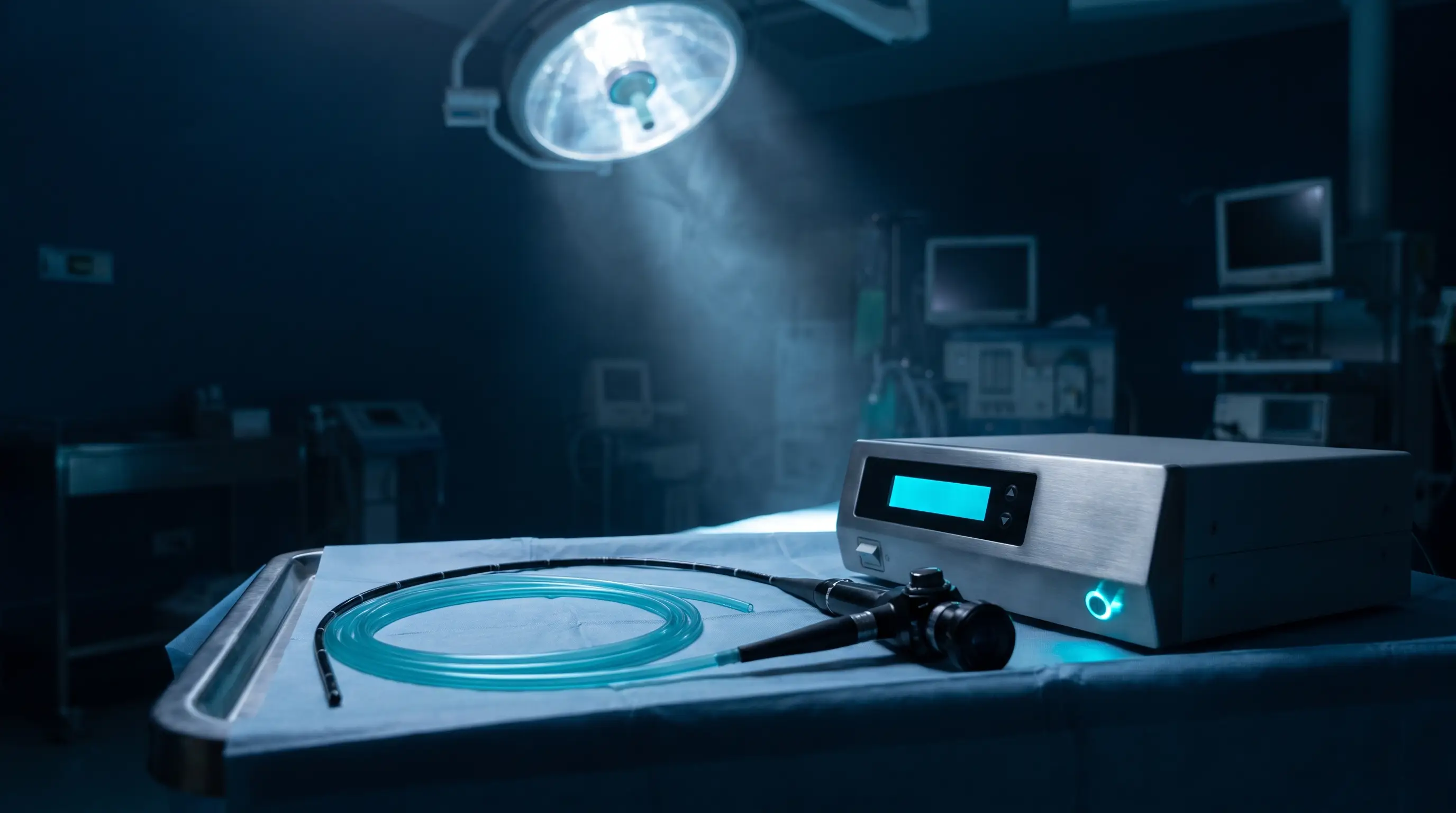
The Problem
The most painful condition in medicine — on repeat.
A moving kidney stone is routinely compared to childbirth — and for half of all sufferers, it comes back within ten years. Shockwave therapy fails on hard or lower-pole stones and often needs repeating; open or percutaneous surgery trades the stone for an incision through the kidney itself. Meanwhile untreated stones silently scar renal tissue and invite obstruction and infection.
The Resolution
Laser dust, not fragments. Pathways, not incisions.
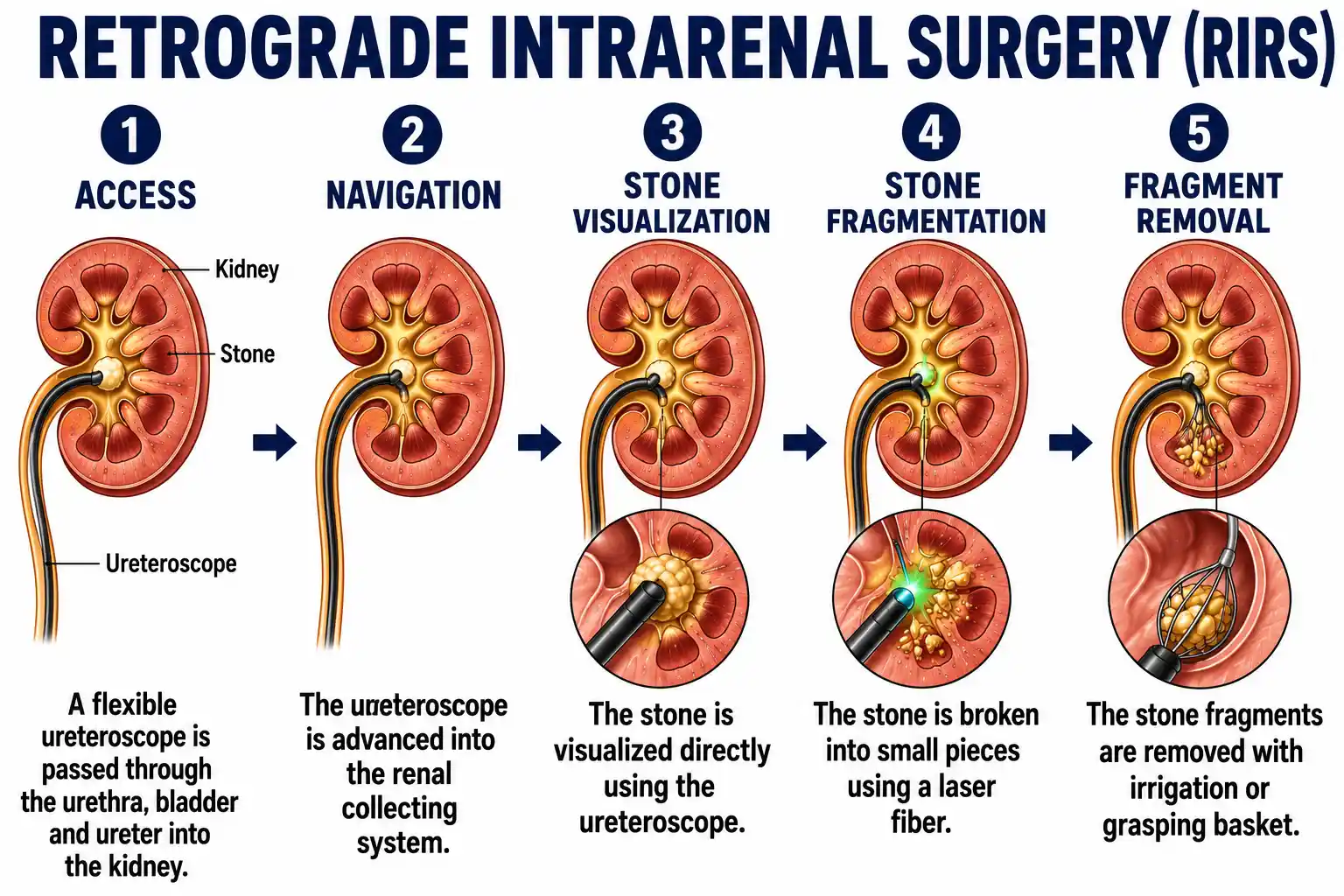
A flexible scope travels through natural channels directly into the kidney; the thulium fiber laser — the newest generation, superseding holmium — vaporises stones of any composition into fine dust that simply washes out. No fragments left to regrow, no incision to heal, and a complete metabolic workup afterwards so the next stone never forms at all.
Why thulium fiber changes the equation.
The thulium fiber laser cuts stone at nearly twice the efficiency of the holmium standard while transferring less heat to surrounding tissue. In practice that means shorter operating times, finer dusting, higher single-session stone-free rates — and healthy renal tissue left exactly as the surgeon found it.
Combined with single-use digital flexible scopes — a fresh, sterile instrument for every patient — RIRS at our partner hospitals reaches stones in calyces that older equipment simply cannot navigate.
And because stones recur, every UroloMax renal journey ends with a full metabolic stone analysis: 24-hour urine chemistry, stone composition analysis, and a written prevention protocol reviewed with you before you fly home.
RIRS is the right instrument when
- Your stone measures up to 2cm, anywhere in the kidney or upper ureter.
- Shockwave lithotripsy has failed, or your stone is too hard or too low for it.
- You take anticoagulants — RIRS is the guideline-preferred option.
- You want zero incisions, minimal downtime, and a same-day discharge.
Candid note: for stone burdens above 2cm, percutaneous surgery (PCNL) can be the better instrument — our surgeons hold both, and will recommend clinically, never commercially.
Request a Renal Case ReviewYour stone-free day, hour by hour.
-
Morning — imaging confirmation
A low-dose CT confirms the stone map planned during your remote review. Your translator walks you through the final consent.
-
The procedure — 30 to 60 minutes
Under light general anesthesia, the flexible scope travels through natural pathways into the kidney. The thulium laser dusts the stone to powder; a basket retrieves anything worth analysing.
-
Afternoon — recovery lounge & discharge
A few observed hours, a comfort check, and your chauffeur returns you to your suite. A soft internal stent, if placed, is removed painlessly days later.
-
Before you fly — prevention protocol
Stone-free confirmation imaging, complete metabolic analysis, and a written prevention plan — then lifetime encrypted follow-up so this chapter never reopens.
One day in Istanbul. A lifetime stone-free.
Send your CT report or symptoms privately. A senior coordinator and a renal surgeon will map your stone-free plan within one business day.